

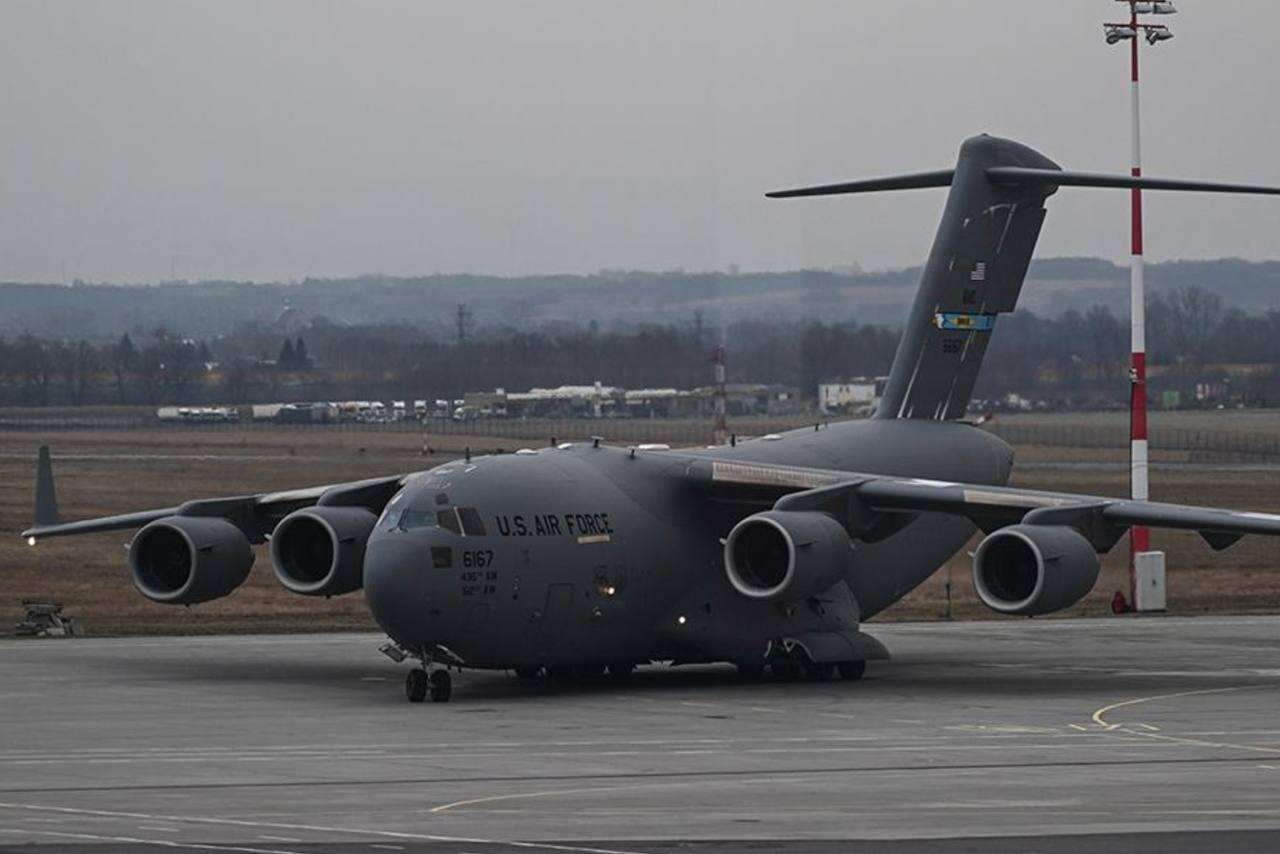
A surprise visit to Moscow by CIA Director John Ratcliffe has opened a new and unusually secretive chapter in relations between Washington and the Kremlin.
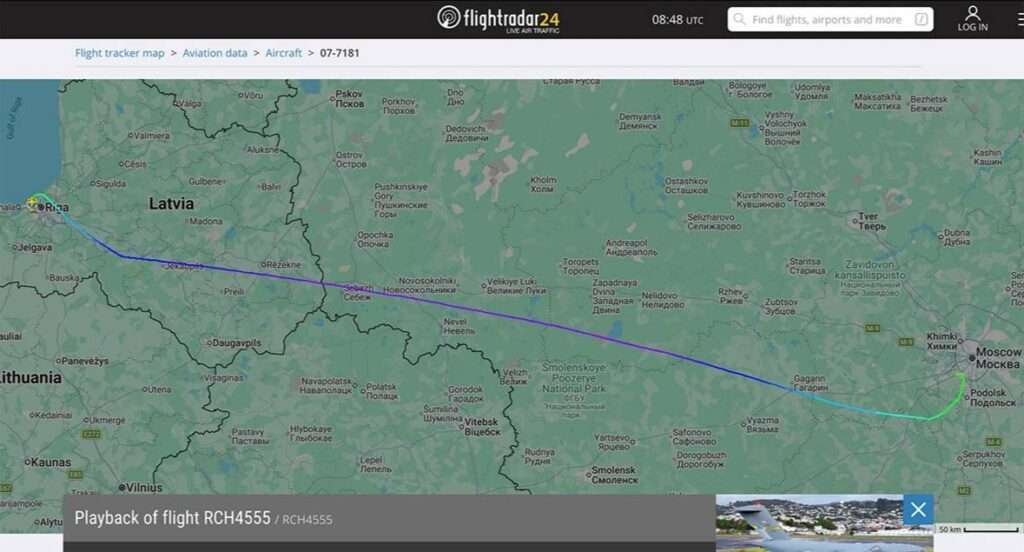
Ratcliffe travelled to the Russian capital on August 25 for talks with senior Russian intelligence officials. The trip was not announced in advance and immediately raised questions about why one of US President Donald Trump’s most senior national security officials had suddenly travelled to Russia.
Russia later confirmed that Ratcliffe met Sergei Naryshkin, the head of Russia’s Foreign Intelligence Service, known as the SVR. Naryshkin described the encounter as a working-level meeting involving sensitive issues connected with the activities of the two intelligence agencies.
But reports in the United States suggest something more significant may have been discussed.
US media reported that Ratcliffe travelled to Moscow partly to warn Russia against attacking or testing NATO countries, amid concerns that Moscow could attempt a limited action designed to test the alliance’s willingness to respond.
Some reports have suggested the warning focused particularly on Estonia, Latvia and Lithuania.
Trump, however, has publicly played down the extraordinary visit, describing it as “semi-routine” and rejecting some of the speculation surrounding Ratcliffe’s mission.
So why did the CIA director travel to Moscow, and what could the visit mean for Russia, Ukraine and NATO?
What Happened During John Ratcliffe’s Moscow Visit?
Ratcliffe arrived in Moscow on August 25 for previously unannounced meetings with Russian officials.
The Kremlin subsequently confirmed that the CIA director had held talks with representatives of Russia’s intelligence services.
Ratcliffe did not meet Russian President Vladimir Putin. However, Kremlin spokesperson Dmitry Peskov said Putin was briefed about the discussions.
Moscow has provided few details about what was actually discussed.
Naryshkin later publicly confirmed that he had personally met Ratcliffe, characterising the talks as a working-level meeting concerning sensitive issues related to the activities of their respective intelligence agencies.
That explanation may sound routine. The circumstances were anything but.
Visits to Moscow by serving CIA directors are extremely rare, particularly during a period of war in Ukraine and deep confrontation between Russia and Western governments.
Ratcliffe’s trip appears to be the first publicly known visit to Moscow by a CIA director since William Burns travelled there in November 2021.
Was Ratcliffe Sent to Warn Russia About NATO?
This is the biggest question surrounding the visit.
US media reports have suggested that Ratcliffe’s surprise mission was partly intended to warn Moscow against attacking or testing NATO.
According to those reports, Washington has concerns that Russia could consider some form of limited action involving a NATO country.
Other reporting has narrowed the potential concern to the Baltic states: Estonia, Latvia and Lithuania.
All three countries are members of both NATO and the European Union.
They are also geographically exposed.
Estonia and Latvia share borders with Russia, while Lithuania sits between Latvia, Belarus and the heavily militarised Russian exclave of Kaliningrad.
Any direct Russian military attack on one of these countries would dramatically escalate the confrontation between Moscow and the West.
Most importantly, it could trigger NATO’s Article 5 collective defence commitment, under which an armed attack against one member is considered an attack against the alliance as a whole.
However, concerns about Russia “testing” NATO do not necessarily mean Washington believes Moscow is preparing a conventional invasion.
A potential test of the alliance could take many forms, including a limited military incident, cyberattack, sabotage or another hybrid operation intended to create uncertainty over how NATO should respond.
Neither Washington nor Moscow has officially confirmed that Ratcliffe delivered such a warning.
Trump Calls the Moscow Visit “Semi-Routine”
President Trump has offered a notably different interpretation of the trip.
Trump described Ratcliffe’s mission as “sort of semi-routine” and rejected suggestions that the CIA director had specifically been sent to Moscow over a possible Russian attack on NATO.
At the same time, Trump suggested that the talks could produce results.
“Something may come out of it,” Trump said while discussing the visit and his administration’s broader efforts to end the war between Russia and Ukraine.
Trump has repeatedly presented himself as capable of negotiating an end to the conflict, but attempts to secure a lasting settlement have faced major obstacles.
Russia and Ukraine remain far apart on fundamental questions including territory, security guarantees and Ukraine’s future relationship with NATO.
Ratcliffe’s mission therefore raises the possibility that intelligence channels are being used alongside more conventional diplomatic negotiations.
Why Do Intelligence Agencies Talk During Political Crises?
The idea of the CIA director travelling directly to Moscow may appear unusual, but communication between rival intelligence agencies can continue even when formal political relations deteriorate.
Such channels can be particularly valuable during periods of military tension.
They allow governments to deliver sensitive messages away from public diplomacy, clarify intentions and potentially prevent misunderstandings from escalating into direct confrontation.
The Kremlin has described continued communication between the intelligence agencies as a positive development, while cautioning against assuming that Ratcliffe’s visit will quickly transform broader US-Russian relations.
In other words, Washington and Moscow can remain strategic rivals while maintaining channels through which particularly sensitive messages can be exchanged.
The Remarkable Parallel With 2021
Ratcliffe’s visit also carries an uncomfortable historical echo.
The last publicly known CIA director to travel to Moscow was William Burns in November 2021.
Burns, who had previously served as US ambassador to Russia, travelled to Moscow as the Biden administration became increasingly concerned about Russian forces gathering around Ukraine.
He delivered a direct warning about the consequences of a Russian invasion.
Approximately three months later, on February 24, 2022, Russia launched its full-scale invasion of Ukraine.
That history inevitably makes Ratcliffe’s trip more significant.
If reports that the current CIA director delivered another warning over possible Russian military escalation are accurate, Washington has once again chosen its intelligence chief as the messenger for an unusually sensitive communication with Moscow.
There is, however, no evidence that a Russian attack on NATO is imminent.
The reported concerns relate to the possibility that Russia could seek to test NATO’s resolve, rather than confirmation that a specific attack has been ordered or planned.
Why the Baltic States Matter
Estonia, Latvia and Lithuania have long been among the NATO members most concerned about Russian military power.
All three were incorporated into the Soviet Union during the Second World War before regaining independence in 1991.
They joined NATO in 2004.
Since Russia’s full-scale invasion of Ukraine, the Baltic governments have been among Kyiv’s strongest supporters and some of the most vocal advocates for stronger Western defence.
NATO has also significantly strengthened its military presence along its eastern flank.
The strategic question is not simply whether Russia has the military capability to launch a major attack against NATO.
Western policymakers have also worried about whether Moscow might attempt something deliberately limited or ambiguous, calculating that NATO governments would disagree over how strongly to respond.
That is why reports that US officials are concerned about a potential Russian test of the alliance have attracted considerable attention.
Ukraine Remains Central to Trump’s Russia Strategy
Despite the NATO speculation, Trump has emphasised Ukraine when discussing Ratcliffe’s trip.
“We would like to see the war with Ukraine end,” Trump said while discussing the Moscow visit.
The CIA mission therefore needs to be viewed within the wider effort by the Trump administration to manage relations with Moscow while searching for a possible settlement to the war.
That creates a difficult balancing act.
Washington wants to maintain channels with Russia and potentially encourage negotiations, while simultaneously reassuring European allies that the United States remains committed to NATO security.
A highly unusual intelligence meeting may allow the administration to do both without turning every discussion into a public diplomatic event.
Reports have also indicated that Ukraine was informed about Ratcliffe’s trip.
Iran May Also Have Been Discussed
Russia and NATO may not have been the only subjects on the table.
Reports have suggested that Ratcliffe also raised Moscow’s relationship with Iran.
Russia maintains close relations with Tehran, including significant military and economic cooperation.
That gives Moscow potential influence at a time when Washington is seeking to increase pressure on Iran.
Trump, however, has rejected suggestions that Ratcliffe’s visit was specifically about some of the NATO and Iran scenarios presented publicly.
Neither the US nor Russian government has released a detailed account of the discussions.
The precise agenda therefore remains partly unknown.
What Has Russia Said?
Moscow has been careful not to exaggerate the significance of the meeting.
Naryshkin confirmed the talks but described them in relatively conventional intelligence terms.
The Kremlin has similarly acknowledged contacts between the two countries’ security services without presenting Ratcliffe’s arrival as the beginning of a major political breakthrough.
That restraint may be deliberate.
Intelligence diplomacy is often most useful precisely because governments do not have to publicly acknowledge every detail of what has been discussed.
It also allows both Trump and Putin to maintain their political positions while continuing direct communication behind closed doors.
Could the Visit Signal Improving US-Russia Relations?
Not necessarily.
A CIA director travelling to Moscow is significant, but communication should not automatically be interpreted as reconciliation.
The United States and Russia remain divided over Ukraine, NATO, sanctions and numerous wider security questions.
Ratcliffe’s trip may actually demonstrate how serious some of those disagreements have become.
If he travelled primarily to warn Russia against escalating tensions with NATO, the visit would represent crisis management rather than a diplomatic thaw.
If Ukraine negotiations dominated the discussions, however, it could indicate that Washington and Moscow are exploring additional channels to find areas of potential compromise.
Both possibilities could also be true simultaneously.
Intelligence diplomacy frequently involves a mixture of warnings, negotiations and attempts to understand an adversary’s intentions.
What Happens Next?
For now, perhaps the most important aspect of Ratcliffe’s Moscow visit is how much remains undisclosed.
We know the CIA director travelled to Moscow.
We know he met Naryshkin and other Russian intelligence officials.
We know Putin did not personally meet Ratcliffe but was briefed on the discussions.
Trump has confirmed the trip and described it as “semi-routine”, while also suggesting that “something may come out of it”.
At the same time, US media reports suggest Ratcliffe carried a considerably more serious message: do not test NATO.
Those two versions are not necessarily contradictory.
A private intelligence channel can simultaneously handle routine security communication and deliver an extraordinary warning.
Whether the Moscow meeting becomes another obscure episode in the long history of US-Russian intelligence contacts, or an important moment in the Trump administration’s attempts to manage Russia, may only become clear in the weeks ahead.
For Europe, however, the reported focus on the Baltic states will be watched particularly closely.
A rare CIA visit to Moscow is noteworthy by itself.
A CIA director travelling there to warn Russia not to test NATO would be something considerably more consequential.
