

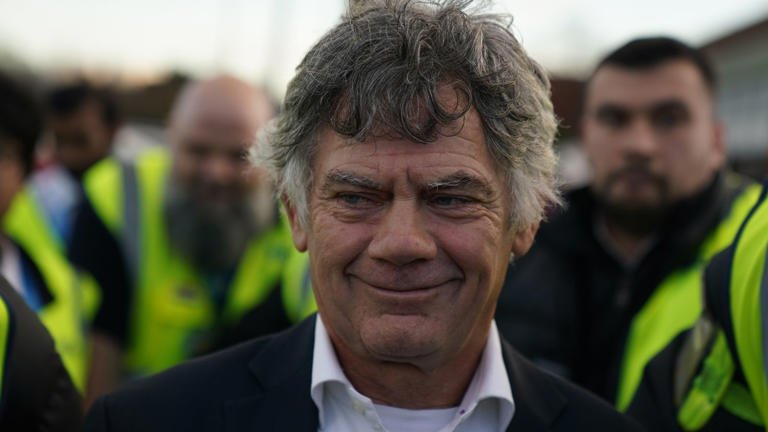
Gerry Hutch, widely known as “The Monk,” captured significant media attention during his unexpected campaign for a seat in the Irish parliament. Running in the Dublin Central constituency, where Sinn Féin leader Mary Lou McDonald dominated the polls, Hutch ultimately finished fifth in the four-seat race.
This foray into politics comes amid ongoing legal troubles. Hutch, 61, is currently on bail in Spain’s Lanzarote for alleged money laundering. When approached by Sky News, officials in Lanzarote declined to comment on the status of his case. Hutch’s campaign team also declined interview requests before the vote count began.
Chaos at the Count Centre
Hutch’s arrival at the Dublin count centre on Sunday sparked pandemonium. It was initially assumed he would stay away following his unsuccessful bid, but he appeared unexpectedly, drawing a massive media frenzy. Security staff struggled to maintain order as reporters, photographers, and camera operators clamored for proximity, shouting questions at the controversial figure.
When asked about his campaign, Hutch attributed his support to a desire for change among voters:
“They are looking for change, and if I got elected, I would give them the change they want.”
As for running again, Hutch quipped:
“I’ve been running all my life, I love running.”
The remark took a literal turn when he jogged through the car park, trailed by journalists.
Hutch’s Criminal Allegations and Feud with the Kinahan Gang
Hutch’s political aspirations are overshadowed by his alleged links to organized crime. A criminal court judge previously described him as the patriarch of the Hutch crime organization, accused of serious criminal conduct—allegations he denies. Notably, he was acquitted earlier this year of the murder of David Byrne, a victim of the infamous 2016 Regency Hotel shooting, which escalated the deadly Hutch-Kinahan gangland feud. The feud has claimed multiple lives, including Hutch’s brother and nephew.
The Voter Perspective: A Message to Traditional Politics
While some Dublin Central residents avoided discussing Hutch’s candidacy publicly, others expressed disillusionment with mainstream political parties. Social Democrats candidate Gary Gannon, who secured the second seat in the constituency, attributed Hutch’s support to neglected communities:
“When people are hurting and don’t see an outlet through traditional politics, they will vote even against their own interests.”
Gannon compared Hutch’s support base to the Brexit phenomenon, highlighting communities left behind by austerity, poor housing, and inadequate healthcare.
“This is a lesson for whoever is in the next government,” Gannon warned.
“Today we’re talking about one candidate. In the next election, it could be many more.”
The Broader Political Landscape
The Irish election saw Fianna Fáil and Fine Gael poised to continue their coalition government despite a record-low combined vote share. Sinn Féin, previously a rising force, suffered significant setbacks. Hutch’s foray into politics, while unconventional, underscores a growing frustration among voters seeking alternatives to the traditional political establishment.
