
Midterm Voting Ends: What Happens Before Results Are Final
The November 3 midterms moved from voting to counting. Here is how reported results, news organizations’ race calls and official certification differ.
Voting in the November 3, 2026, U.S. midterm elections gave way to counting and result reporting Tuesday, with the Associated Press describing relatively few problems during Election Day. The process that follows includes steps beyond the numbers displayed on election-night websites: local and state officials must review and certify the returns.
For readers following a congressional race or a state contest, that distinction matters. A news organization can identify a winner before officials complete certification, while an election website can show all precincts reporting without displaying the final certified totals.
This recap covers the voting-to-counting transition on November 3. It does not treat a snapshot of an unfinished count as the final result, and it should be read separately from subsequent reporting on which candidates and parties won.
Before voting, our Election Day checklist covered registration, polling places and ballot-return rules. The next stage is the handling of results.
A national election with local administration
The Federal Election Commission identified November 3 as the regularly scheduled federal general election date. It also directs questions about election administration to state and local offices because state law primarily governs those procedures.
That division explains why a single national election night produces many different local reporting schedules. The authoritative source for a jurisdiction's official returns is the office responsible for its election, rather than a national social-media tally.
The AP's Election Day report described voting as proceeding with relatively few problems despite concerns before the election. That is a report about the conduct of voting, not a substitute for checking a particular county's results or the resolution of an individual ballot issue.
What a race call does and does not mean
Ahead of the election, the AP said it planned to count votes and declare winners in nearly 7,000 races, including more than 5,200 contested races. Its announced coverage included 35 Senate contests, 435 House contests and 36 gubernatorial contests, as well as state legislative elections.
Those figures describe the scope of the news agency's coverage. They are not numbers of seats won by either party and should not be presented as the outcome of the election.
The AP also described reporting teams in all 50 states and an election-night livestream with updates and explanations of race calls. A news organization's declaration is its assessment of a race; official certification remains a separate government function.
Why officials keep working after election night
The U.S. Election Assistance Commission says election-night results are unofficial, including returns displayed as all precincts reporting. Its guidance distinguishes the initial release of numbers from the canvass and the later act of certification.
During the canvass, officials aggregate and confirm valid ballots across voting methods. The EAC identifies mail ballots, military and overseas ballots, early votes, Election Day votes and provisional ballots among the categories involved.
Certification is the process in which election officials attest that the results accurately account for the votes cast. The EAC cautions that jurisdictions do not necessarily complete every step in the same order.
For readers returning to Tuesday's coverage, the useful questions are what the timestamp shows and whether the page is reporting unofficial totals, a media race call or certified results. Keeping those labels attached to the numbers makes an old screenshot less likely to be mistaken for the latest official outcome.
Sources
- EAC: results, canvass and certification
- AP: 2026 election coverage plan
- AP: Election Day reporting
- FEC: election and voting information
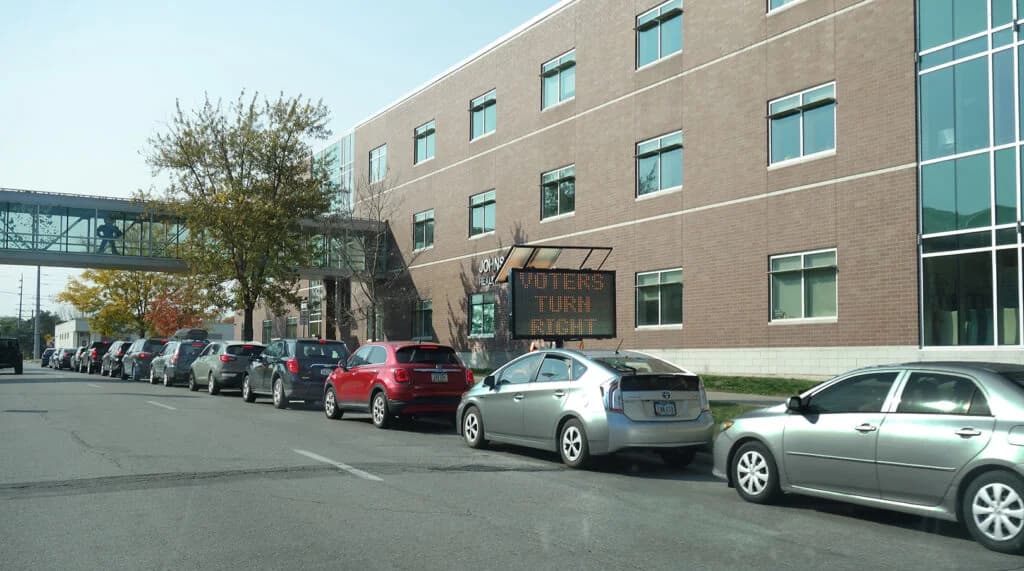
Featured image: An early-voting vehicle queue in Iowa City, Iowa, in October 2020; archival photograph used for illustration. Photo: Alan Light / Wikimedia Commons, CC BY 2.0. Original photograph, unaltered.
