


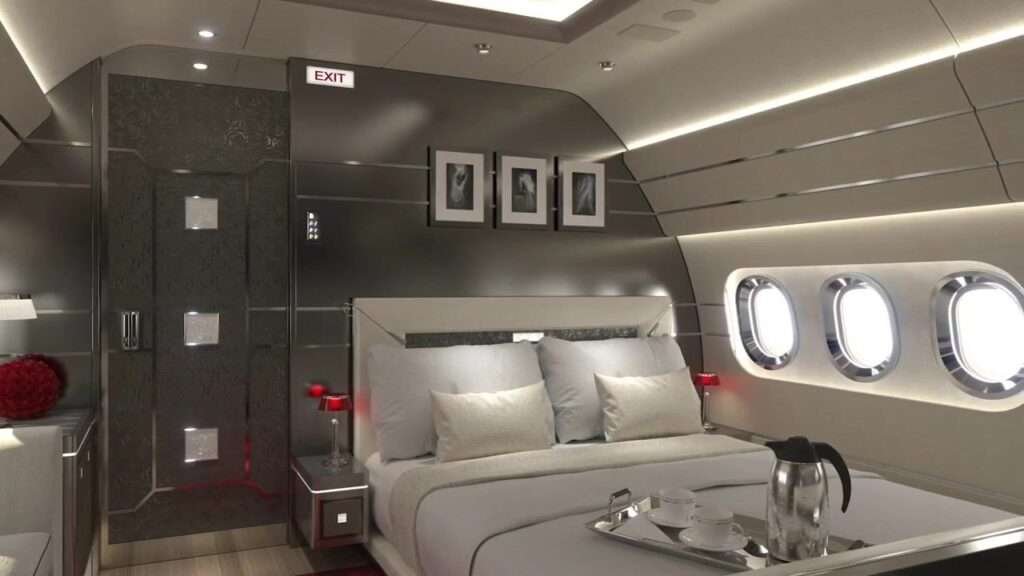
Boeing Business Jets takes a different approach from every other private jet maker. Instead of designing a business jet from scratch, it starts with an airliner and turns it into something closer to a flying residence.
Boeing Business Jets. Video: Boeing.
The division started in 1996 as a joint venture between Boeing and General Electric. Above all, the idea was simple. Take a proven airliner with global support, remove the airline seats and offer a cabin far larger than any normal business jet.
Three decades later, BBJ has become shorthand for the very top end of private aviation.
Boeing Business Jets at a Glance
- Founded: 1996, as a Boeing and GE joint venture
- Narrow-body models: BBJ 737-7, 737-8 and 737-9
- Wide-body models: VIP versions of the 787, 777, 777X and 747-8
- Orders: 259, with 233 aircraft delivered by late 2025
- Typical buyers: governments, heads of state and private owners
- Main rival: Airbus Corporate Jets
From the 737 to the 777X
The original BBJ used the Boeing 737-700. Then came the BBJ2, built on the longer 737-800, and the BBJ3, based on the 737-900ER.
Their sales also show where demand sits. Boeing delivered 113 of the original BBJ, compared with 23 BBJ2s and just seven BBJ3s.
Today, however, the range uses newer airframes. The narrow-body line-up is based on the 737 MAX family, while VIP versions of the 787 Dreamliner, the 777, the 777X and the 747-8 sit above it.
By late 2025, Boeing Business Jets had won 259 orders and delivered 233 aircraft.
Who Buys Boeing Business Jets
The customer list is unusual. Historically, governments and heads of state have made up a large share of buyers. Besides them, private owners, companies and a small number of charter operators make up the rest.
The Middle East has long been one of the most important markets, especially for larger models.
Wide-body business jets, meanwhile, are almost always bought by governments or the very wealthiest owners. That is because airliner-sized aircraft bring airliner-sized costs. For example, industry estimates put operating costs at roughly $8,000 to $12,000 per flight hour, depending on the cabin and how the jet is used.

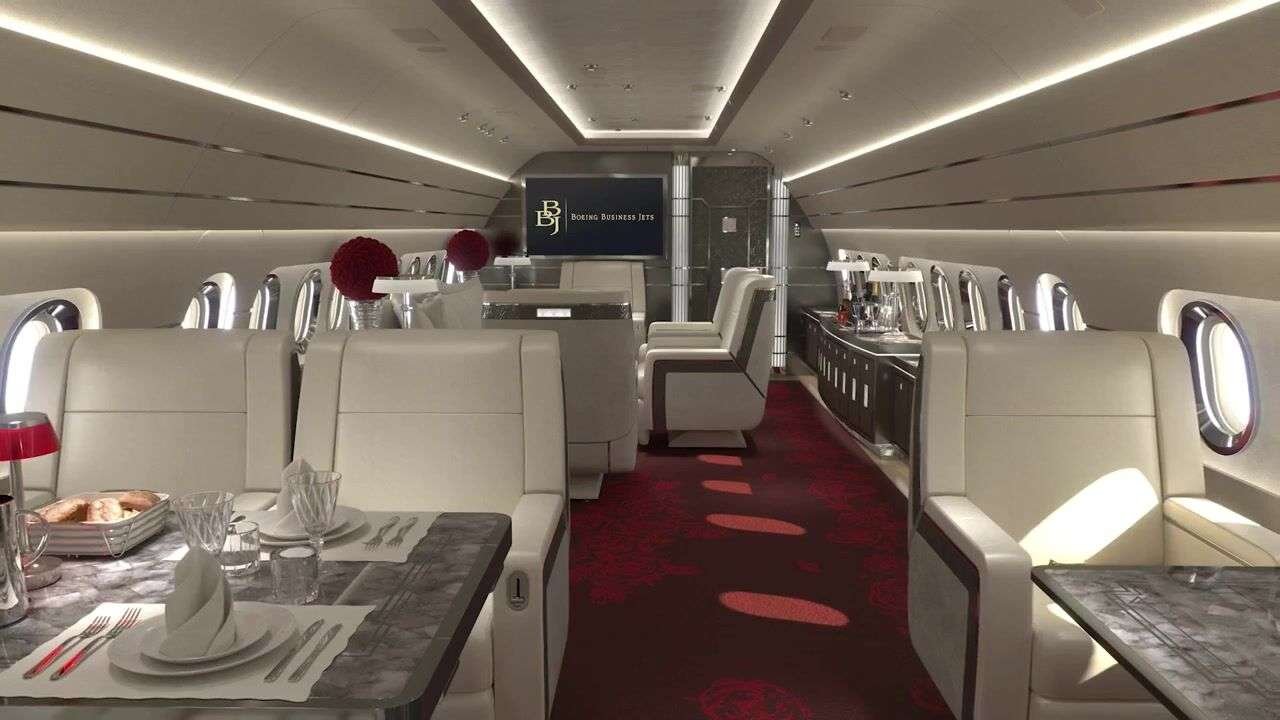
Delivered Without a Cabin
One feature sets the business apart. Surprisingly, Boeing does not normally fit the luxury interior itself.
Instead, new aircraft leave the factory without a cabin. Specialist completion centres then design and build bespoke interiors. These can include bedrooms, bathrooms with showers, offices, dining rooms and meeting areas. As a result, the process can take a long time and add a large sum to the price.
To speed things up, Boeing introduced BBJ Select for the BBJ 737-7 in 2023. It offers pre-designed cabin modules that customers can combine in 144 ways, as well as three colour palettes. Boeing developed the layouts with completion specialists Aloft AeroArchitects and Greenpoint Technologies, and it offers them at a fixed price with shorter delivery times.
Boeing Business Jets Model Line-Up
| Model | Based on | Type |
|---|---|---|
| BBJ 737-7 | 737 MAX 7 | Narrow-body |
| BBJ 737-8 | 737 MAX 8 | Narrow-body |
| BBJ 737-9 | 737 MAX 9 | Narrow-body |
| BBJ 787 | 787 Dreamliner | Wide-body |
| BBJ 777X | 777-8 and 777-9 | Wide-body |
| BBJ 747-8 | 747-8 | Wide-body |
The Wide-Body Flagships
Finally, at the top of the range, the numbers become extraordinary.
For instance, the BBJ 777-300ER offers 338 square metres (3,641 sq ft) of cabin space and a range of 9,220 nautical miles. Boeing then launched the BBJ 777X in 2018, calling it the longest-range business jet it had ever offered.
Later, the first commitment for a BBJ 777-9 came in 2022 from an undisclosed customer. Since then, Lufthansa Technik and other completion houses have shown cabin concepts that look more like luxury apartments than aircraft.
Boeing Business Jets and Their Rivals
The main rival is Airbus Corporate Jets, which converts Airbus airliners into VIP aircraft in much the same way.
Further competition comes from the largest conventional business jets. For example, Gulfstream’s G700 and G800 and Bombardier’s Global 7500 and 8000 now offer intercontinental range. They also cost less to run and can use smaller airports.
Still, Boeing Business Jets stand apart on space. After all, no purpose-built business jet comes close to the cabin of a converted airliner. For some buyers, especially governments that carry delegations, security teams and offices, that space is the whole point.
A Niche That Endures
Overall, the BBJ market will always be small compared with the wider business jet industry. Yet as long as heads of state need an airborne office, and some private buyers want the largest jet money can buy, Boeing will keep turning airliners into something far more personal.
Frequently Asked Questions
What are Boeing Business Jets?
They are VIP and private versions of Boeing airliners, from the 737 MAX family up to the 787, 777X and 747-8.
Who buys them?
Buyers include governments, heads of state and private individuals, as well as companies and a few charter operators.
Does Boeing fit the interior?
Usually not. Specialist completion centres install the cabin, although BBJ Select offers pre-designed layouts for the BBJ 737-7.
Sources
How we reported this: we based this article on Boeing’s official information and on reports from the specialist aviation outlets below. Operating cost figures are industry estimates. Last updated 19 October 2026.
- Boeing Business Jets: official site
- Boeing: BBJ unveils premium cabin selections for VIP jets
- Boeing: VIP customers order up to four Boeing Business Jets
- AVweb: inside a 737 BBJ at NBAA-BACE 2025
- GlobalAir: Boeing business jets market overview