


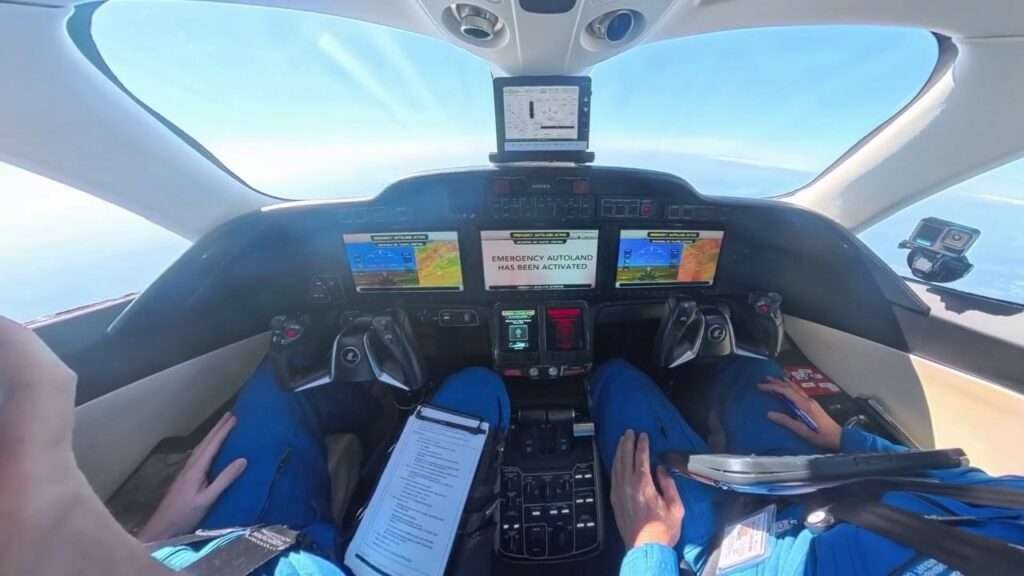
HondaJet Emergency Autoland is now certified on the HondaJet Elite II, so the jet can land itself if the pilot becomes incapacitated. It answers a question every passenger in a single-pilot jet has asked at least once: what happens if the person at the controls cannot fly?
HondaJet Elite II with Emergency Autoland. Video: Honda Aircraft Company.
Honda Aircraft Company announced the news on 4 February 2026, after the US Federal Aviation Administration certified the system. As a result, the Elite II became the first production twin-turbine very light business jet available with the technology.
HondaJet Emergency Autoland at a Glance
- Aircraft: HondaJet Elite II
- Approval: FAA certification announced in February 2026
- First: the first production twin-turbine very light jet with the feature
- Activation: a dedicated button, or automatically if the pilot stops responding
- Avionics: Garmin G3000 flight deck with autothrottle
- Availability: US owners now, with other countries to follow
How HondaJet Emergency Autoland Works
The idea is simple, even if the engineering is not. When the pilot can no longer fly, the aircraft takes over and lands.
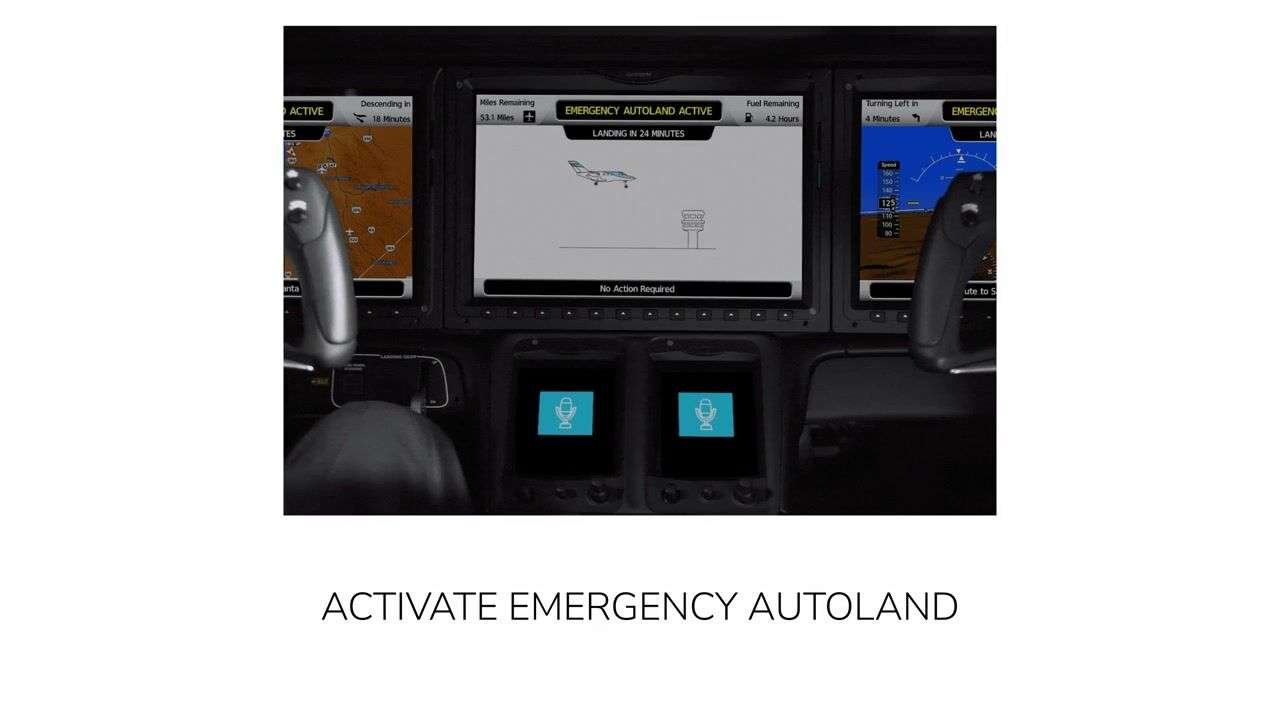
There are two ways to start it. First, someone on board can press a dedicated button. Alternatively, the aircraft’s monitoring system can switch it on when it detects that the pilot has stopped responding.
Once active, the system handles the whole sequence on its own. It sends an emergency code and makes radio calls to air traffic control. It then weighs up the weather, terrain, fuel and runway lengths before it picks a suitable airport.
After that, it sets up the aircraft for landing and flies the approach. Finally, it touches down and brakes to a full stop.
For passengers with no flying experience, this removes the worst case of all: being alone in a jet with nobody able to land it.

Why Autothrottle Came First
The new system builds on an earlier first for the Elite II. In October 2024, it became the first twin-turbine very light jet with an autothrottle.
Autothrottle manages engine power automatically. That is essential for any system that must fly an approach and landing without help, so its approval cleared the way for the next step.
Honda then finished the key certification flight tests for HondaJet Emergency Autoland in October 2025. Four months later, the FAA approval followed.
The foundation is the Elite II’s Garmin G3000 avionics. Garmin brought emergency autoland to general aviation in 2020 on a single-engine turboprop. Since then, the technology has spread across turboprops and light jets. Cirrus’s single-engine Vision Jet already offers a similar system, but the HondaJet is the first twin in its class to carry one.
The Aircraft Behind the Technology
The HondaJet Elite II entered service in 2022. It is the latest version of the original HondaJet, which gained its FAA type certificate at the end of 2015.
Its best-known feature is still the engines mounted above the wings. This layout frees up space inside the fuselage and also helps to keep the cabin quiet.
Compared with earlier models, the Elite II carries more fuel and has a higher maximum take-off weight. It also gained upgraded avionics. The jet can fly 1,547 nautical miles and cruise at up to 422 knots, which is enough for trips such as London to Madrid without a fuel stop.
By 2024, Honda had delivered more than 250 HondaJets worldwide.
HondaJet Emergency Autoland Key Facts
| Detail | HondaJet Elite II |
|---|---|
| Emergency Autoland | FAA certified, announced February 2026 |
| Autothrottle | Added in October 2024 |
| Avionics | Garmin G3000 |
| Range | 1,547nm |
| Maximum cruise speed | 422 knots |
| Entered service | 2022 |
Why Safety Sells in This Class
Very light jets are often flown by an owner-pilot or one professional pilot. Their passengers, meanwhile, are usually family members or colleagues rather than aviation experts.
For that audience, the reassurance is powerful. Honda says US owners had been waiting eagerly for the feature. Similarly, chief executive Hideto Yamasaki has described it as a way to give customers more peace of mind on every flight.
It is also a strong sales argument. Light jet buyers compare range, cabin size and running costs. Yet safety technology that rivals do not offer stands out, especially for buyers moving up from piston aircraft or turboprops.
What Comes Next
In the short term, Honda’s task is international approval, so that Elite II owners outside the US can fit the system too.
In the longer term, the same automation matters for the HondaJet Echelon. This larger model is designed for single-pilot flights across the United States. Features such as autothrottle and emergency autoland help to make that goal realistic.
For now, the Elite II has a claim that no other twin-engine very light jet can make. If the pilot cannot land it, the aircraft can.
Frequently Asked Questions
What is HondaJet Emergency Autoland?
It is a system on the HondaJet Elite II that can fly the aircraft to a suitable airport, land and stop on its own if the pilot is incapacitated.
Can passengers activate it?
Yes. Someone on board can start it with a dedicated button. It can also switch on automatically if the pilot stops responding.
Is it available outside the United States?
Not yet. Honda says it is working with regulators in other markets to approve it for international customers.
Sources
How we reported this: we based this article on Honda Aircraft Company’s official announcements and on reports from the specialist aviation outlets below. Last updated 19 October 2026.
- Honda Aircraft Company: Elite II certified with Emergency Autoland
- GlobeNewswire: Honda completes type inspection authorization for Emergency Autoland
- AVweb: HondaJet Elite II certified with Emergency Autoland
- GlobalAir: Elite II first very light jet with Emergency Autoland
- Airframer: Elite II becomes first twin VLJ with Emergency Autoland