Daylight Saving Time Ends Today: What It Means for Sleep
Clocks fell back across most of the U.S. on November 1. Sleep experts explain the adjustment, while health agencies emphasize consistent sleep routines.
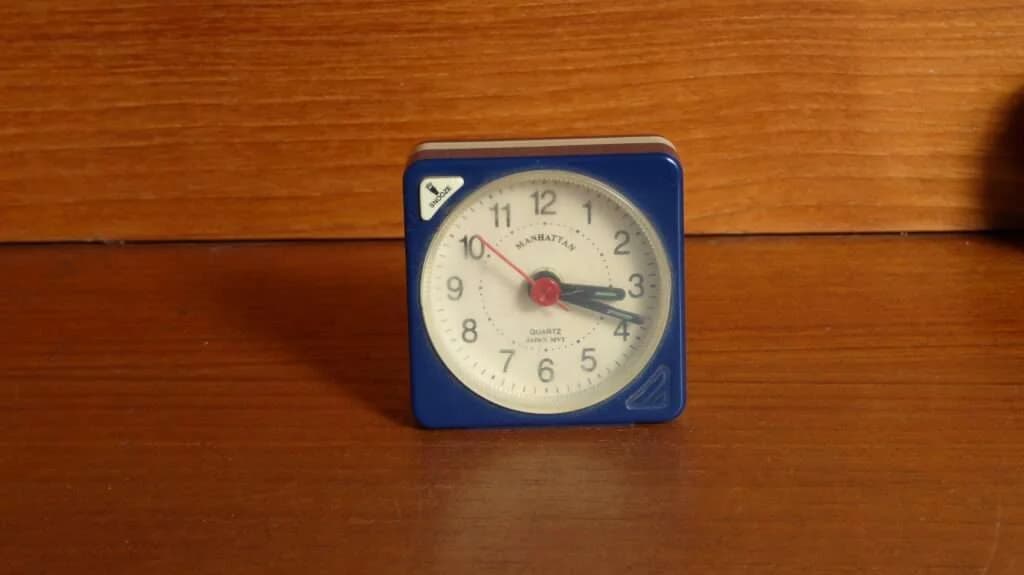
Featured image: An alarm clock, shown for illustration. Photo: Chenspec / Wikimedia Commons, CC BY-SA 4.0. Original photograph, unaltered.
Daylight saving time ended across most of the United States on Sunday, November 1, 2026, with clocks moving back one hour at 2 a.m. local time. The return to standard time gives the day an extra hour, but sleep specialists say the body’s adjustment may take longer than changing a clock.
For families heading into a new school and work week, the practical issue is keeping sleep and daily routines aligned with the new time. Children may wake earlier than parents expect, while adults can find that their usual bedtime feels different even though the clock shows a familiar hour.
In guidance published ahead of the change, Seattle Children’s sleep specialist Dr. Maida Lynn Chen said sleep onset and waking times can shift for a few days. She described the mismatch between internal body clocks and the reset social clock as similar to jet lag.
What changed overnight
The National Institute of Standards and Technology lists November 1 as the end of daylight saving time in 2026. At the transition, 2 a.m. becomes 1 a.m., repeating an hour.
Returning to standard time shifts an hour of daylight from the evening to the morning, as measured by the clock. It does not create additional daylight; it changes the time assigned to it.
Most of the country makes the change, but Hawaii and most of Arizona do not observe daylight saving time. The U.S. Department of Transportation also lists American Samoa, Guam, the Northern Mariana Islands, Puerto Rico and the Virgin Islands among the places that do not observe it.
Why an extra hour does not reset the body instantly
The National Heart, Lung, and Blood Institute explains that internal body clocks follow roughly 24-hour cycles, known as circadian rhythms. Light and darkness help coordinate these rhythms with the environment and influence when a person feels alert or drowsy.
Changing a clock alters the schedule people follow, while those internal signals continue to matter. Artificial light and caffeine can also affect the signals that help regulate sleep and waking, according to the institute.
In her October 20 guidance, Chen, medical director of Seattle Children’s Pediatric Sleep Center, said standard time aligns more closely with the natural light-dark cycle than daylight saving time. However, the transition itself can still disrupt the beginning and end of overnight sleep.
For children, she recommends maintaining meal times and bedtime routines according to the new clock. Morning sunlight and physical activity can help, while avoiding excessive screen light in the evening supports settling down for sleep.
Keep the focus on regular, good-quality sleep
The Centers for Disease Control and Prevention’s general sleep guidance emphasizes consistency: going to bed and getting up at the same time each day. It also recommends a quiet, relaxing bedroom at a cool temperature.
The agency’s age-based recommendations provide a useful reference:
- Adults ages 18–60: at least seven hours daily.
- Adults ages 61–64: seven to nine hours daily.
- Adults ages 65 and older: seven to eight hours daily.
CDC stresses that sleep quality matters alongside duration. Repeated waking, difficulty falling asleep, or feeling tired despite enough time asleep can be signs of poor-quality sleep.
Its guidance recommends talking with a healthcare provider about regular sleeping problems. A seasonal clock change is a reason to pay attention to routines, but it is not a diagnosis for persistent symptoms.
A timely reminder for household safety
Wisconsin Emergency Management used its October 28 time-change reminder to urge households to test smoke and carbon monoxide alarms. The agency also recommended checking emergency supplies for expired items and reviewing family emergency plans.
Those checks are separate from adjusting sleep schedules, but they provide another concrete use for the annual reminder. The agency’s guidance includes reviewing plans with children, older adults and anyone else in the household.
This article is for general information and is not medical advice.