November Tire Safety: NHTSA Checks Before Winter Driving
NHTSA guidance explains tire-pressure checks, tread wear and recall lookups as drivers prepare their vehicles for colder weather and winter trips.
As November begins, drivers preparing for winter trips can use existing National Highway Traffic Safety Administration guidance to check tires, review vehicle readiness and look for unrepaired safety recalls. The agency’s advice focuses on routine maintenance and preparation before difficult weather arrives.
This is seasonal coverage of standing federal guidance, not an announcement of a new recall or a nationwide weather warning. Conditions differ across the United States, and a vehicle’s maintenance requirements depend on its manufacturer and equipment.
The practical distinction is between checking the condition of a particular car and assuming that a dashboard warning or a clean recall search answers every safety question. NHTSA’s resources explain both what owners can check and the limits of those checks.
Pressure and tread need separate attention
NHTSA recommends checking tire pressure at least monthly, including the spare, when tires are cold. In its guidance, cold means the vehicle has not been driven for at least three hours.
The recommended pressure comes from the vehicle’s tire-information label or owner’s manual, rather than the number molded into a tire’s sidewall. Front and rear specifications can differ, so the vehicle’s instructions are the reference point.
A tire-pressure monitoring system does not replace that routine check. NHTSA says those systems warn when a tire is significantly underinflated, which means a driver should not wait for the warning light before measuring pressure.
Tread is another issue. The agency says tires should be replaced when tread wears down to 2/32 of an inch. Built-in wear indicators can show when tread has reached their level; pressure alone cannot reveal that condition.
Prepare for the trip and the conditions
NHTSA’s winter-driving guidance warns that snow, sleet and ice create dangerous road conditions. It advises slower speeds on slick or snow-covered roads and enough following distance to allow time to stop.
Snowplows need additional room because they travel slowly, make wide turns and may stop or change lanes frequently. The agency advises against crowding a plow or traveling directly beside it.
These are operating precautions rather than promises that a particular vehicle can safely make every journey. A maintenance check should be considered alongside the conditions expected on the actual route.
For owners arranging service, the useful starting point is the manufacturer’s maintenance information. A tire-pressure reading, a tread inspection and a review of the planned journey address different questions; none should be treated as a substitute for the others.
Check recalls without overreading the result
NHTSA’s recall tool accepts a vehicle identification number, or VIN, and also offers a license-plate lookup. A VIN contains 17 characters and can be found near the lower left of the windshield or on vehicle registration documents.
A search by year, make and model provides general information, while a vehicle-specific lookup can identify an unrepaired recall associated with that vehicle. The agency notes important exclusions: repaired recalls do not appear as open repairs, and some recently announced recalls may not yet include all affected VINs.
Older recalls, some small manufacturers and non-safety service campaigns may also fall outside the lookup’s results. A message showing no unrepaired recalls therefore should not be read as a complete mechanical inspection.
For a November readiness check, keep the questions distinct: follow the vehicle’s maintenance instructions, consider the road conditions and review any recall information that applies. If something is unclear, the manufacturer or an appropriate service professional can address the vehicle-specific issue.
Sources
- https://www.nhtsa.gov/vehicle-safety/tires
- https://www.nhtsa.gov/winter-driving-tips
- https://www.nhtsa.gov/recalls
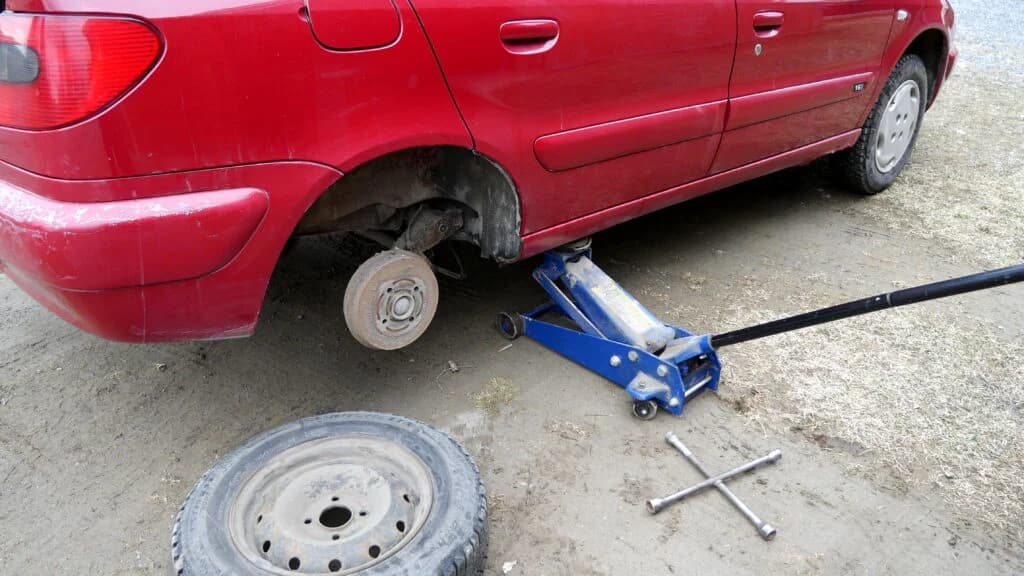
Featured image: A car during a wheel change; illustrative photograph, not a repair tutorial. Photo: Santeri Viinamäki / Wikimedia Commons, CC BY-SA 4.0. Original photograph, unaltered.